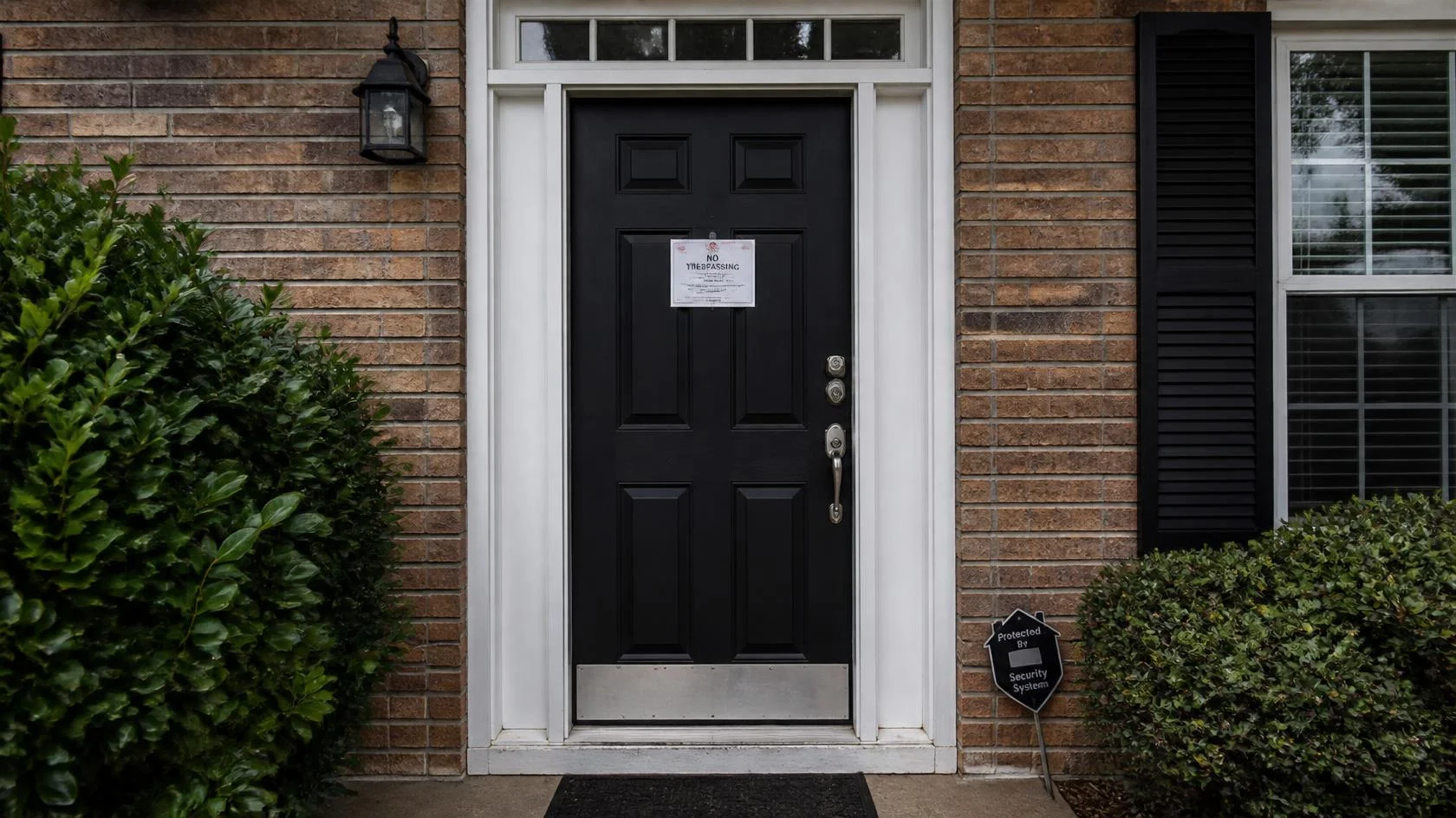
Finding out someone is living in your Maryland property without permission is stressful — and it can stall a sale fast. The good news: Maryland law gives property owners a clear legal path to remove a squatter, and a 2025 law change actually sped that process up. Here’s exactly how it works, what changed, and how to sell the property even while the situation is unresolved.
Quick Answer
You cannot legally remove a squatter yourself — no changing locks, shutting off utilities, or removing belongings. Maryland requires a court process called a Wrongful Detainer Action. As of a 2025 law change, courts must now schedule a hearing within 10 business days of filing, which is significantly faster than the old timeline. Adverse possession (a squatter’s legal claim to ownership) requires 20 years of continuous, open occupation in Maryland — nearly impossible to establish in a typical squatting situation.
What Counts as a Squatter in Maryland?
A squatter is someone occupying your property with no lease, no rental payments, and no permission from you. This is different from:
- A holdover tenant — someone who had a valid lease that expired but hasn’t left
- A tenant in default — someone with an active lease who stopped paying rent
Those situations go through standard landlord-tenant eviction procedures under Title 8 of the Maryland Code. A true squatter — someone who never had a lease or your permission — is removed through a Wrongful Detainer Action under Md. Code, Real Property § 14-132 instead.
Step-by-Step: How to Legally Remove a Squatter in Maryland
Step 1: Do Not Attempt a Self-Help Eviction
It’s tempting to just change the locks or shut off the power. Don’t. Maryland law prohibits self-help evictions entirely. If you remove a squatter’s belongings, change locks, or cut utilities without a court order, the squatter can sue you — and you could owe damages even though they had no legal right to be there in the first place.
Step 2: Serve Written Notice to Vacate
Give the occupant a written notice demanding they leave. For most situations this is a 7-day notice. Keep a copy and proof of delivery — this becomes evidence if the case goes to court.
Step 3: File a Wrongful Detainer Complaint
If the squatter doesn’t leave, file a Complaint for Wrongful Detainer in the District Court for the county where the property sits. You’ll need to show:
- Proof you own the property (deed, tax records)
- Evidence the occupant has no lease and never had permission to be there
- Proof that notice was served
Step 4: Attend the Court Hearing
Under Maryland’s 2025 law update (effective October 1, 2025), courts must now schedule the wrongful detainer hearing within 10 business days of filing, and the complaint must be served on the squatter within 4 business days. This is a meaningful speed-up from prior timelines and is one of the biggest recent changes property owners should know about — most existing guides online don’t reflect it yet.
Step 5: Enforce the Judgment
If the court rules in your favor, it issues an Order of Restitution. Only the sheriff can physically remove the occupant — you still cannot do this yourself, even with a court order in hand. If the squatter comes back afterward, you can seek an injunction, and violating it carries civil and criminal penalties.
Realistic timeline: If uncontested, the full process can wrap up in a few weeks under the new law. If the squatter contests the case or appeals, expect it to stretch into several months.
Does Adverse Possession Actually Apply?
This is the most misunderstood part of squatter law. Adverse possession is the legal theory that lets a long-term occupant eventually claim ownership — but in Maryland it requires proving all of the following for a continuous 20-year period:
- Actual possession of the property
- Open and notorious use (not hidden or secretive)
- Exclusive possession (not shared with the owner or public)
- Hostile possession (without the owner’s permission)
- Continuous, uninterrupted occupation for 20 straight years
The burden of proof is entirely on the squatter, not you. In nearly every real-world squatting case — someone who moved in weeks or months ago — adverse possession simply doesn’t apply. If you hear a squatter claim “tenant’s rights” or “squatter’s rights” after a short occupancy, that claim has no legal weight in Maryland.
Also new in 2025: creating a fake lease to claim tenancy is now a criminal offense in Maryland — a felony punishable by up to 10 years, with knowingly possessing a counterfeit lease charged as a misdemeanor. This directly targets the fake-lease tactic squatters sometimes use to slow down eviction.
Can You Sell a House While a Squatter Is Still Living There?
Yes — but it affects your options and your buyer pool:
- Traditional retail buyers using a mortgage will almost always require the property to be vacant at closing, and most lenders won’t fund a purchase with an unresolved occupancy issue. This usually means you need to fully resolve the squatter situation before listing on the open market.
- Cash investors are far more comfortable buying occupied or legally complicated properties. Many will buy the property as-is, with the squatter still present, and handle the removal process themselves after closing.
This is the single biggest gap in most guides on this topic: they explain the eviction process in detail but don’t address what if you want to sell now instead of waiting out a court timeline.
Three Paths Forward if You Have a Squatter
1. Resolve it yourself, then list traditionally. Best if you’re not in a rush and want to maximize sale price with a full-market listing. Expect several weeks to a few months for the legal process, plus repair/staging time afterward.
2. Hire an attorney to fast-track the wrongful detainer action. A real estate attorney familiar with Maryland’s updated 10-day hearing rule can move the case efficiently and handle documentation, service, and court appearances for you.
3. Sell as-is to a cash buyer, squatter and all. This skips the eviction timeline from your side entirely. You get a cash offer, close on your schedule, and the buyer takes on the occupancy issue as part of the deal.
If your priority is speed and getting out from under a stressful, disruptive situation, option three is usually the fastest path to a check in hand.
Next Step Equity MD buys Maryland properties as-is — including homes with squatters, unpermitted occupants, or unresolved tenant issues. No repairs, no waiting on a court date, no showings with someone still inside. Get a no-obligation cash offer and set your own closing date.
FAQ
Can I evict a squatter myself in Maryland?
No. Maryland prohibits self-help evictions. Changing locks, shutting off utilities, or removing a squatter’s belongings without a court order can expose you to a lawsuit, even though the squatter has no legal right to the property.
How long does it take to remove a squatter in Maryland?
As of the 2025 law update, courts must schedule a wrongful detainer hearing within 10 business days of filing. Uncontested cases can resolve in a few weeks; contested cases with appeals can take several months.
Do squatters get rights after living in a house for a while in Maryland?
Not meaningfully. Adverse possession — the only path to an actual ownership claim — requires 20 continuous years of open, exclusive occupation. Short-term squatting does not create legal ownership rights.
Can I sell my house if a squatter is still living there?
Traditional mortgage buyers typically require vacant possession at closing. Cash buyers and real estate investors, however, will often purchase occupied properties as-is and handle the removal themselves.
What changed in Maryland squatter law in 2025?
Chapter 188 of the Acts of 2025 (effective October 1, 2025) requires courts to schedule wrongful detainer hearings within 10 business days of filing and requires service on the squatter within 4 business days — a significant speed-up from the prior process. The same legislation also made creating or knowingly possessing a fake lease a criminal offence.